Tom reads Marion’s manuscript aloud to Patrick
My PolicemanTom reads Marion’s manuscript aloud to Patrick in the final passage of the novel, when Patrick may have only a week or less to live. The reading brings the three characters’ unresolved history into one room: Marion offers a written confession, Tom gives it a voice, and Patrick listens. It is also bound up with Marion’s departure. She leaves her manuscript behind and plans to leave Peacehaven, without asking Patrick to forgive her.
Circumstances and Appeal
Dr Wells has told Marion that it is vital to keep talking to Patrick, although his remaining time may be no more than a week. Marion knows she cannot sustain that effort alone, so she asks Tom to speak to him. When Tom asks what he could do, Marion proposes that he read aloud. Patrick will not respond, she explains, but he can hear. The request turns a general medical instruction into a specific act of care, and makes Tom’s voice the means by which Marion’s words can reach Patrick.
Marion has already written something she wants both men to hear. Tom’s surprise at this news gives the manuscript an importance beyond its contents: it is an undisclosed piece of work she has kept to herself, now offered to the two people most closely bound to the story she has to tell. The reading is therefore not simply a practical substitute for conversation. It is Marion’s chosen way of addressing Patrick and of placing Tom inside that address.
Confession and Conflict
Tom’s response is shaped by his own silence and loss. He challenges Marion to consider what that silence has meant to him, and says that he has already lost Patrick once. The confrontation makes clear that the proposed reading cannot erase the hurt between them or turn their shared past into an uncomplicated act of reconciliation. Tom raises the cost of what Marion is asking before she can proceed.
Marion answers that the manuscript is not revenge but confession. She insists that it concerns her own wrongs, not anyone else’s. Her distinction defines the terms of the reading: the manuscript is not presented as a verdict on Tom or Patrick, nor as a demand that either man accept her account without reservation. It is her own reckoning, offered to be heard. The shift from spoken argument to written confession lets her continue when Tom signals that he wants no more, while making clear that the account is hers to own.
The Reading at Peacehaven
The manuscript’s account of the morning records Marion’s ordinary care for Patrick: changing his bedclothes, bathing him, and feeding him liquidised Weetabix through a straw. She tells him Tom will soon come to sit with him, and notices hope in Patrick’s eyes. The intimate routines of care frame the reading not as an isolated literary gesture but as part of the work of keeping company with a severely ill person.
Tom surprises Marion by being home after his regular early swim. They share breakfast with Walter at their feet, the first time they have eaten together since the morning Patrick spilled his cereal. Marion then retrieves the manuscript from the kitchen drawer, where she has kept it while half hoping Tom would find it. She places it on the table and leaves the room. Her decision to withdraw gives Tom and Patrick privacy, while the manuscript itself remains between them as a deliberate invitation.
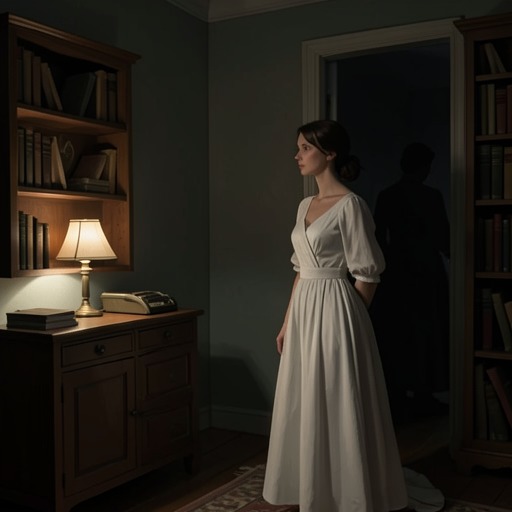
Later, Marion looks in and finds Tom sitting close to Patrick’s bed, reading from her pages. Patrick’s body is struggling against the pillows and leaning to one side, but his eyes are open and fixed on Tom. As the room darkens, Marion turns on a corner lamp so that the two men can see one another clearly. Tom stumbles briefly over a sentence and continues. Neither looks toward Marion; she slips out and closes the door softly. The scene’s focus rests on their attention to each other, while Marion, who wrote the words and made the reading possible, remains outside their shared moment.
Departure and Narrative Significance
Marion has begun packing a case with only a few essentials: a nightdress, a change of clothes, a washbag, and a novel. She expects Tom can send the rest later. From her bedroom she listens to the low sound of his voice carrying her thoughts to Patrick, describing the experience as strange, frightening, and wonderful. The manuscript thus changes hands without ceasing to be Marion’s: its words are hers, but Tom’s reading makes them present to Patrick. Her departure and their listening happen at once, rather than resolving into a single family reunion.
Marion does not expect to return to look in on Patrick. She leaves the page on the kitchen table in the hope Tom will read it to him, and hopes that he will take Patrick’s hand. She cannot ask Patrick for forgiveness, but asks, through the page, for his ear. Her next destination is uncertain, though she considers Norwood a place to start because Julia still lives there; she wants to tell Julia the story and, after so many words of her own, listen to someone else’s. The manuscript reading therefore ends not with an explicit pardon or a settled future, but with a transfer of attention: Tom remains with Patrick, while Marion turns toward leaving and toward the possibility of another person’s story.